
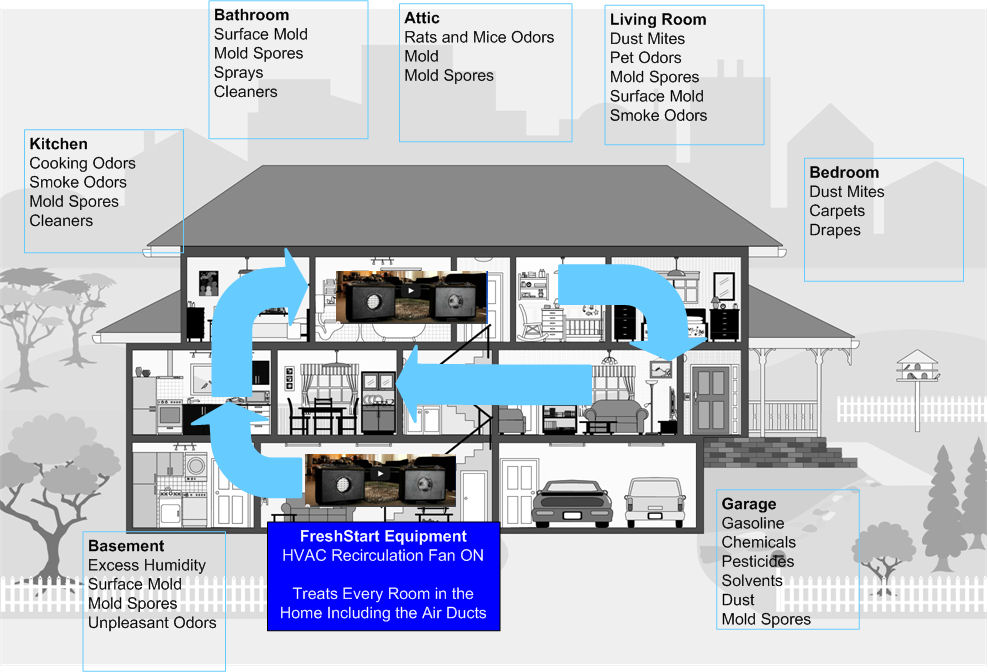
Can household dust mites cause allergic reactions?
Yes — but it’s their feces, not the mites themselves, that trigger reactions. A gram of house dust can hold as many as 1,000 dust mites and over 250,000 fecal pellets. Once airborne, these particles are easily inhaled, causing sneezing, coughing, and itching in many people.
What is “Sick Building Syndrome”?
A general term for symptoms caused by contaminated indoor air — mold, chemicals, or other biological toxins in a home or building. Identifying the exact cause can be difficult since mold, in particular, is present almost everywhere. People with asthma, hay fever, or other allergies are at higher risk. Watch for headaches, eye/nose/throat irritation, dry or itchy skin, dizziness, trouble concentrating, chronic fatigue, or sensitivity to odors — symptoms that improve after leaving the building are a strong signal.
What is mold, and where does it come from?
Mold is a microscopic fungus that spreads via airborne spores landing on organic material. Spores are essentially everywhere, indoors and outdoors, and mold can grow on almost any organic surface given the right conditions.
Is mold toxic?
Most common molds aren’t hazardous to healthy people. A few, like Stachybotrys, can be strongly toxic in quantity; Aspergillus can cause lung disease in immune-compromised individuals. In general, excess exposure to even common molds can worsen asthma, hay fever, or other allergies.
Is mold becoming more common?
Not really — mold has always been around. What’s changed is awareness: more publicized cases of mold-related illness and litigation have made it feel more prevalent than it actually is.
What should I do if I find mold?
Don’t panic — most mold is non-toxic. If symptoms (itchy eyes, runny nose, coughing, headaches) persist more than two weeks, investigate further. Small infestations can often be handled with bleach and water; larger ones benefit from a whole-space treatment like FreshStart. Either way, find and fix the water source first, since mold won’t grow without it.
How does the FreshStart Process work?
It uses high concentrations of hydroxyl radicals (OH), generated from oxygen and hydrogen in carefully controlled concentrations and durations, to eliminate the effects of odors, bacteria, viruses, and surface molds throughout a space. Once treatment ends, the space is vented back down to normal outdoor-air levels.
Is the process new?
Prompt Care received a US patent for the process on August 5, 2008.
Is it toxic?
No — though the concentrations used during treatment can irritate lungs, which is why people and pets must stay out during the Lock-Out period. Within about an hour after treatment, concentrations return to outdoor-air levels with no harmful residue.
Can it treat mold inside walls?
The process eliminates the effects of surface mold it comes into contact with. Mold growing inside walls or other inaccessible areas needs a remediation contractor — we’re glad to work alongside one to make sure the space is safe once that work is done.
Will it damage anything or leave a residue?
No — no film or residue of any kind, just a clean, fresh interior.
What about cooking odors or cigarette smoke?
Fish, curry, garlic, onion, smoke, and pet odors are removed from the air as well as furniture, bedding, and carpet. Odors from concentrated pet urine may need an enzymatic pre-cleaner first.
Do I need to tent my house?
No — people, pets, and sensitive plants need to be out during treatment, but otherwise there’s very little required beyond the standard prep checklist.
How long until I can return home?
A typical treatment takes about 4 hours, plus roughly an hour for equipment removal and a post-treatment evaluation — about 5 hours total.
Will it take care of new carpet or paint odors?
Yes — VOCs (volatile organic compounds) from paints, adhesives, and new carpet are eliminated in just a few hours.
What do I need to do to prepare?
All people and pets must leave the premises; delicate plants should be removed; open all closed storage areas (drawers, closets, cabinets); separate fabric furniture and textiles as much as possible; strip bedding and drape it over furniture or doors.
Will things build back up after treatment?
It depends on the source. If the underlying cause — a leak, ongoing smoking, pet accidents — isn’t addressed, things can gradually return over time. The treatment eliminates what’s already there; changes in routine afterward help keep it that way. Many customers find that a biannual treatment keeps things under control long-term.